
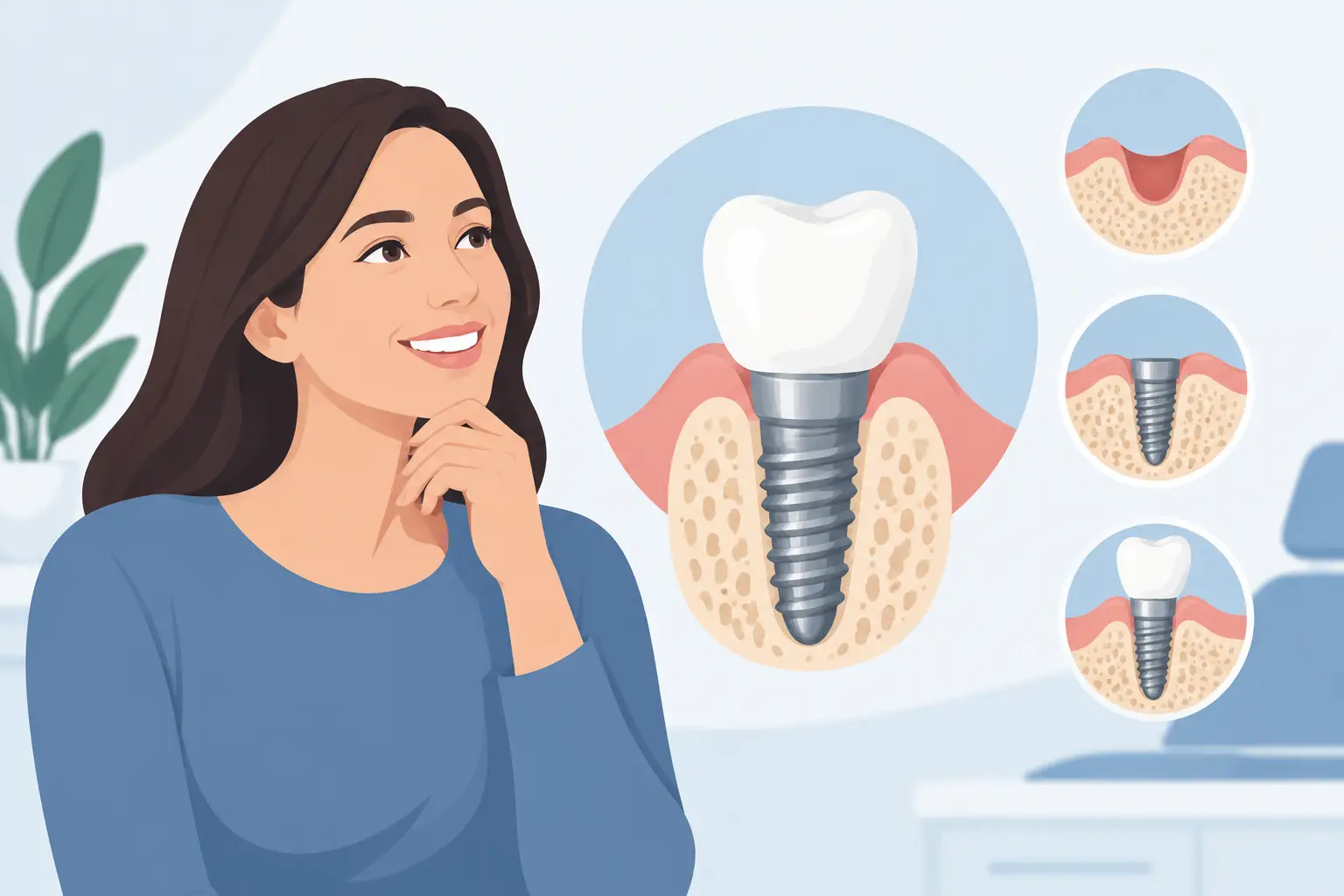
A tooth that is cracked beyond repair, painfully infected or already loose can make every meal and conversation feel like a calculation. For the right patient, immediate implant placement can replace that failing tooth at the same surgical appointment, avoiding a prolonged gap and moving treatment forward with confidence.
It is not a shortcut and it is not suitable for every extraction. It is a carefully planned clinical approach that depends on the condition of the tooth, the surrounding bone and gum tissue, your bite, and how predictably the implant can be stabilised. When those factors are favourable, it can be an excellent route towards a fixed, natural-looking replacement.
What is immediate implant placement?
Immediate implant placement means placing a dental implant into the jawbone directly after a tooth is removed. Rather than allowing the extraction site to heal for several months before implant surgery, the clinician removes the tooth as gently as possible, prepares the site and places the implant during the same visit.
The implant is a small titanium fixture that acts as the root of the new tooth. It must then bond securely with the bone, a biological process called osseointegration. Once the implant has healed sufficiently, a custom crown, bridge or full-arch restoration can be fitted.
This approach is often confused with immediate loading. They are related but different. Immediate placement refers to when the implant is inserted. Immediate loading means a fixed temporary tooth or bridge is attached soon afterwards, sometimes on the same day. An implant may be placed immediately but left to heal beneath the gum, or with a discreet temporary restoration that is kept out of heavy biting contact.
Why patients consider this approach
The most obvious advantage is timing. Having an extraction and implant placement in one surgical appointment can reduce the number of procedures and shorten the overall treatment journey. For a front tooth, where a visible gap can feel particularly distressing, a carefully made temporary tooth may also help preserve confidence while the area heals.
Placing an implant at the time of extraction may help support the shape of the gum and reduce some of the bone changes that naturally occur after a tooth is lost. However, it does not eliminate bone remodelling altogether. The final aesthetic result still relies on skilled planning, delicate surgical technique and a well-designed final restoration.
For people with multiple failing teeth, the same principle can form part of a wider full-mouth rehabilitation plan. In selected cases, several teeth can be removed, implants placed and a fixed provisional bridge provided on the day. This is often described as a same-day smile, but the long-term result still involves a healing phase and a final, bespoke restoration.
Who is suitable for immediate implant placement?
Suitability is decided through a full assessment rather than by the extraction alone. A tooth may look hopeless above the gum line while the bone around its root remains strong enough to support an implant. Equally, a tooth that appears straightforward can have infection, root damage or bone loss that makes immediate placement less predictable.
Your clinician will assess the quality and volume of available bone, especially the intact outer wall of bone around the tooth. They will also consider gum thickness and position, the presence and extent of infection, neighbouring teeth, your bite and any clenching or grinding habits. Three-dimensional imaging is commonly used to assess vital structures and plan the implant position with precision.
General health matters too. Well-managed medical conditions do not automatically rule out treatment, but healing capacity must be considered. Smoking, uncontrolled diabetes, certain medications and untreated gum disease can increase complications and may mean a staged approach is safer. The goal is never simply to place an implant quickly. It is to place it where it has the strongest chance of lasting well.
When a staged approach may be better
Sometimes the wisest treatment is to remove the tooth, clear infection, preserve or rebuild the bone if needed, and allow the site to heal before implant placement. This can be particularly appropriate where there is significant bone loss, a large defect in the socket, active infection affecting the surrounding tissues, or insufficient stability for the implant.
Waiting is not a failure or a compromise in quality. In complex situations, it can create a more stable foundation and a more predictable cosmetic outcome. A temporary tooth, bridge or denture can be planned so that you are not left without an acceptable smile during healing.
What happens at the appointment?
Before treatment, the team will discuss your medical history, examine the teeth and gums, take the necessary scans and photographs, and explain the proposed restoration. Digital planning allows the implant position to be designed around both the available bone and the final tooth position. That distinction matters: an implant placed only where bone is easiest to find may not produce the best function or appearance.
On the day, the tooth is removed as atraumatically as possible to protect the surrounding bone and gum. The implant is then placed at the planned angle and depth. Small gaps around the implant may be filled with bone graft material where clinically indicated, and the gum may be carefully shaped or supported to protect the appearance of the future tooth.
If the implant achieves strong primary stability and the bite can be controlled, a temporary crown or bridge may be fitted. It is normally designed for appearance and light function, not for biting into crusty bread or chewing on one side. In other cases, a healing cap is used and a temporary replacement is provided separately. Your clinician will recommend the option that gives your implant the best environment to heal.
Healing: the part patients should not rush
Many patients are pleasantly surprised by recovery, particularly when treatment is planned well and post-operative instructions are followed. Some swelling, bruising, tenderness and minor bleeding are normal in the first few days. Pain relief, a soft diet and careful oral hygiene are usually advised, along with avoiding smoking and strenuous exercise immediately after surgery.
The more significant healing occurs below the gum. Over the following weeks and months, the bone integrates with the implant. Even if you leave the clinic with a fixed temporary tooth, the implant is not yet ready for unrestricted force. Following dietary advice is one of the most practical ways to protect the result.
Review appointments allow the team to monitor the gum healing, the temporary restoration and your bite. Once healing is established, the final crown or bridge is made to match your smile, speech and chewing pattern. A high-quality final restoration should feel secure, look natural and be designed so you can clean around it properly.
The risks and trade-offs to understand
Dental implants have a strong long-term track record, but no treatment is risk-free. Immediate placement can carry a greater aesthetic challenge in visible areas because the gum and bone are already responding to the loss of a tooth. Implant stability may be insufficient on the day, a graft may be required, or the plan may need to change during surgery to protect the outcome.
Other possible risks include infection, delayed healing, gum recession, changes in the contour of the tissues, nerve or sinus complications depending on the area treated, and failure of the implant to integrate. These risks are reduced through thorough assessment, skilled surgery, good home care and regular maintenance, but they cannot be entirely removed.
Cost should also be viewed in context. A quote may include the extraction, implant, grafting materials, temporary tooth, final crown and review care, or these may be itemised separately. Asking what is included helps you compare plans fairly. The lowest initial fee is not always the best value if it does not account for the planning, restorative work and aftercare needed for a predictable result.
Choosing confidence over haste
Immediate implant placement can be life-changing when it is clinically appropriate: one carefully managed procedure, a protected smile during healing and a clear path back to comfortable eating and speaking. Yet the best treatment plan is always the one built around your anatomy, health and long-term goals, not a promise that every tooth can be replaced on the same day.
At Smile More Implant Centre, a consultation is an opportunity to understand the condition of your teeth, discuss fixed replacement options without judgement and receive clear advice on the most predictable way forward. Whether your implant can be placed immediately or needs a staged plan, the aim is the same: a secure, healthy smile you can rely on.