
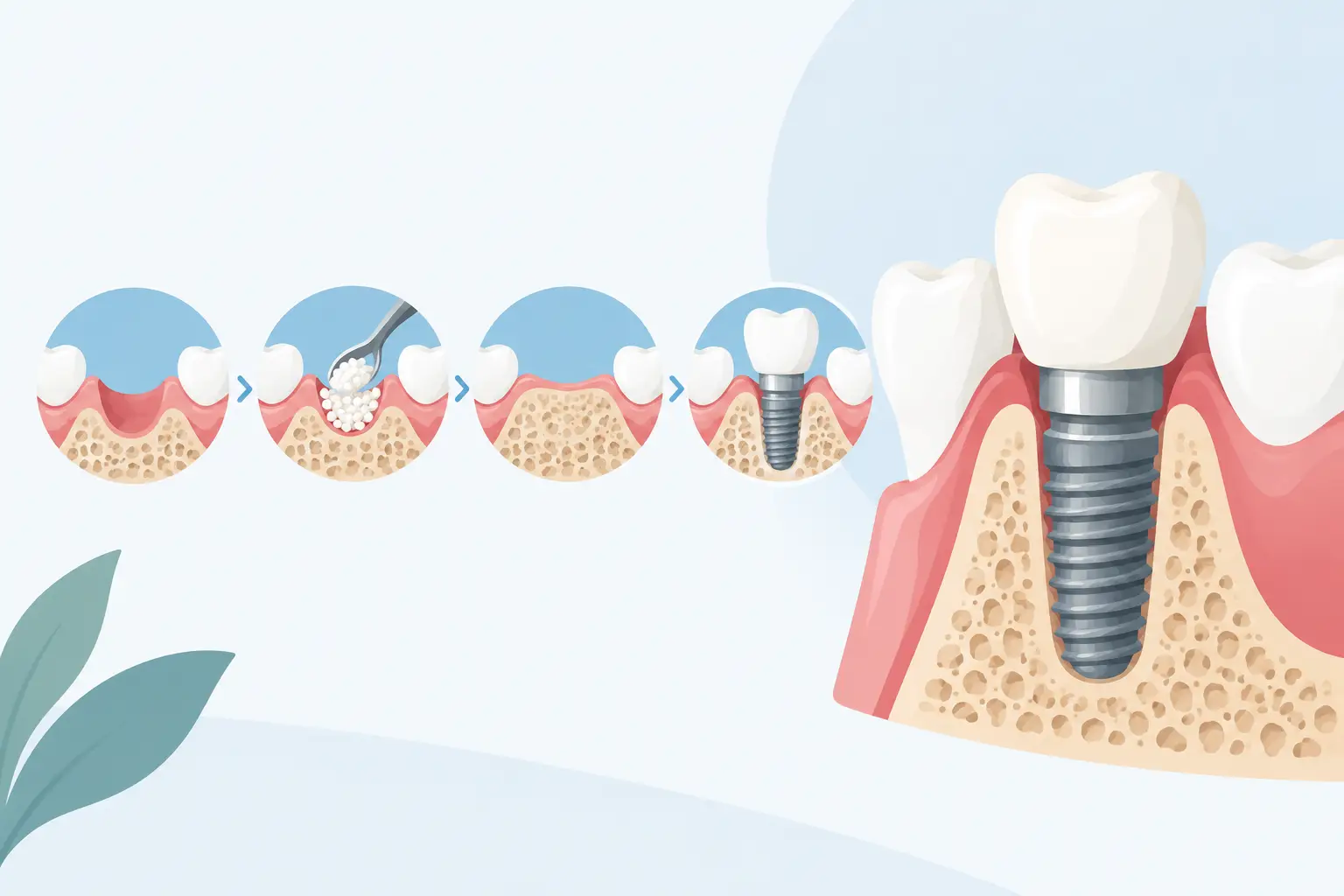
A dental implant needs more than a gap where a tooth used to be. It needs a stable foundation in healthy jawbone. When that foundation has reduced, bone grafting can rebuild the support needed to place an implant securely and achieve a natural-looking, long-lasting result.
For many people, hearing they need a graft can feel like a setback. In reality, it is often a carefully planned step that makes a permanent tooth replacement possible. It is also not the answer for every patient. Modern implant planning can sometimes avoid grafting altogether, particularly when advanced implant techniques are suitable.
Why bone loss happens after tooth loss
Your jawbone is designed to respond to chewing forces. Once a tooth is missing, that part of the jaw no longer receives the stimulation it once did. Over time, the bone may become narrower, shorter or less dense. The process can begin soon after an extraction and continue gradually for years.
Gum disease, infection around a failing tooth, trauma, poorly fitting dentures and long-term tooth loss can all contribute to reduced bone volume. In the upper jaw, the air-filled sinus above the back teeth may also leave limited space for implants. This is why two people with the same missing tooth can require very different treatment plans.
An implant consultation should assess the amount, shape and quality of the available bone, rather than relying on a visual examination alone. Detailed 3D imaging allows the clinician to plan the ideal implant position with precision and determine whether grafting would improve the predictability of treatment.
What is bone grafting?
Bone grafting is a procedure used to add or regenerate bone in an area where it is needed. The graft material acts as a framework that supports the body’s own healing process. Over time, your bone cells grow into and around the material, creating a stronger base for an implant.
The material used may be your own bone, donated human bone processed for medical use, animal-derived mineral that has been specially prepared, or a synthetic alternative. Each option has a specific role. The right choice depends on the size of the defect, the location in the jaw, your health and the treatment goal.
A graft does not simply “fill a hole”. Successful treatment depends on careful site preparation, stable placement of the material, protection of the area during healing and thoughtful implant planning. In some situations, a protective membrane is placed over the graft to guide healing and help prevent soft tissue growing into the space intended for bone.
When is a graft needed before a dental implant?
A graft may be recommended when there is not enough bone to place an implant in the safest or most favourable position. This can mean inadequate width, height or density. It may also be required after an extraction where infection has damaged the surrounding bone.
Small grafts are commonly placed at the time of tooth extraction to preserve the shape of the socket for a future implant. Other patients need a larger graft before an implant can be considered, especially if the tooth has been absent for many years.
In the back of the upper jaw, a sinus lift may be advised. This creates additional bone beneath the sinus so an implant can be positioned with appropriate support. The procedure sounds daunting, but it is a well-established approach when carefully selected and planned.
Sometimes an implant can be placed at the same appointment as a minor graft. In other cases, it is safer to graft first and allow the site to heal before implant surgery. There is no advantage in rushing a foundation that needs time to become stable.
When grafting may not be the best route
Not every person with bone loss needs a conventional graft. Angled implants, wider or shorter implants, and strategically selected implant positions can sometimes make use of the bone that remains. For full-arch cases, immediate-load systems may be possible where the available bone is strongest.
For severe upper-jaw bone loss, advanced solutions such as zygomatic or pterygoid implants can bypass areas with limited bone and anchor in stronger facial structures. These are highly specialised procedures, so suitability must be assessed by an experienced implant surgeon. The best plan is the one that balances long-term function, treatment time, complexity and cost for you – not simply the plan with the most grafting.
What happens during the procedure?
Bone grafting is usually carried out under local anaesthetic, with sedation options available for patients who feel particularly anxious or are having more extensive treatment. You should not feel pain during the procedure, although you may notice pressure or vibration.
The clinician gently accesses the treatment area, places the graft material and secures it where necessary. A membrane and fine stitches may be used to protect the site. If the graft is performed following an extraction, it may be placed directly into the cleaned tooth socket.
The appointment length varies considerably. A straightforward socket-preservation graft may take little additional time, while larger grafting procedures require more detailed surgical planning. You will receive clear aftercare instructions before leaving the clinic, including advice on cleaning, eating and managing any swelling.
Healing time and recovery
Most patients describe the first few days as manageable rather than painful. Swelling, tenderness and minor bruising are normal after surgery, particularly with larger grafts. These usually improve over the first week. Prescribed or recommended pain relief can help, and a cool pack used externally may reduce swelling during the early stages.
Healing beneath the gum takes longer. A small graft may need several months before an implant is placed, while larger grafts can take longer to mature. Your clinician will monitor healing and use follow-up imaging when needed. The timetable is based on what the bone is doing, not on a one-size-fits-all calendar.
Smoking or vaping can significantly affect healing and increase the risk of complications. Good plaque control, a nutritious diet and attending review appointments all support a more predictable recovery. If you wear a denture, it may need adjusting so it does not press on the grafted area.
Contact the clinic promptly if you experience worsening pain after the first few days, persistent bleeding, increasing swelling, fever, a bad taste or discharge. Complications are uncommon, but early assessment matters.
Understanding the trade-offs
Bone grafting can broaden the range of implant options and help achieve ideal implant placement. It can also add treatment stages, healing time and cost. For a single missing tooth in the visible smile zone, rebuilding the bone contour may be particularly valuable for supporting the gum line and creating a more natural aesthetic result.
For a full-mouth rehabilitation, the decision may be different. A patient who wants fixed teeth quickly may be better suited to an advanced graft-free implant approach, while another may benefit from staged grafting to support a specific long-term restoration plan. Health history, medications, gum condition, bite forces and expectations all need to be considered.
A quality consultation should explain the alternatives in plain language. You should understand why a graft is being recommended, whether it is essential or preferred, how long healing is expected to take, and what the likely costs are before committing to treatment.
Preparing for a bone graft consultation
Bring a full medical history and details of any medicines you take, including treatments for osteoporosis, blood thinners and diabetes medication. These do not automatically rule out implant treatment, but they can affect surgical planning and healing advice.
If you have old X-rays or information about previous dental treatment, they can be useful, though new diagnostic imaging is often required. Be open about smoking, anxiety, denture difficulties and what you hope to change. Whether your priority is eating confidently, avoiding removable teeth, restoring your smile or completing treatment efficiently, those goals should shape the plan.
At Smile More Implant Centre, treatment planning begins with understanding the person behind the dental problem. Bone loss may make treatment more complex, but it does not mean you have run out of options. With the right assessment and a plan built around your anatomy, health and goals, a strong foundation for a renewed smile may still be within reach.
The most helpful next step is not to assume that a graft is inevitable or to delay because you fear it. A specialist assessment can show what is possible, what is genuinely necessary and which route gives you the clearest path back to comfortable eating and confidence.